I have five foster cats in my spare room right now, and a couch that already lost one arm to a determined tortoiseshell named Biscuit. That combination makes me unusually picky about cat scratching posts and protectors, because I have watched, repeatedly, what happens when a household buys the wrong one: the posts sit untouched and the furniture takes the damage. Scratching is not destruction, it is communication. Your cat is telling you where the territory markers go. Your job is to give that message a legal place to land.
Related: Sisal Vs Carpet Scratching Posts: What Cats Actually Use
The best purchase for most households is the LEMONDA 31.5-inch scratching post, because height is the thing cats cannot compromise on, and it is the only post in this group tall enough for a full vertical stretch. The CHEERHOME sisal bed is the better pick if your cat scratches horizontally on rugs, and the NO PINS protector sheets are what you buy the same day you bring any of it home, to protect the couch while your cat decides. But that is the short answer. The long answer is about base plates, sisal versus carpet, and why a tree that stops below your waist is a rug with legs.
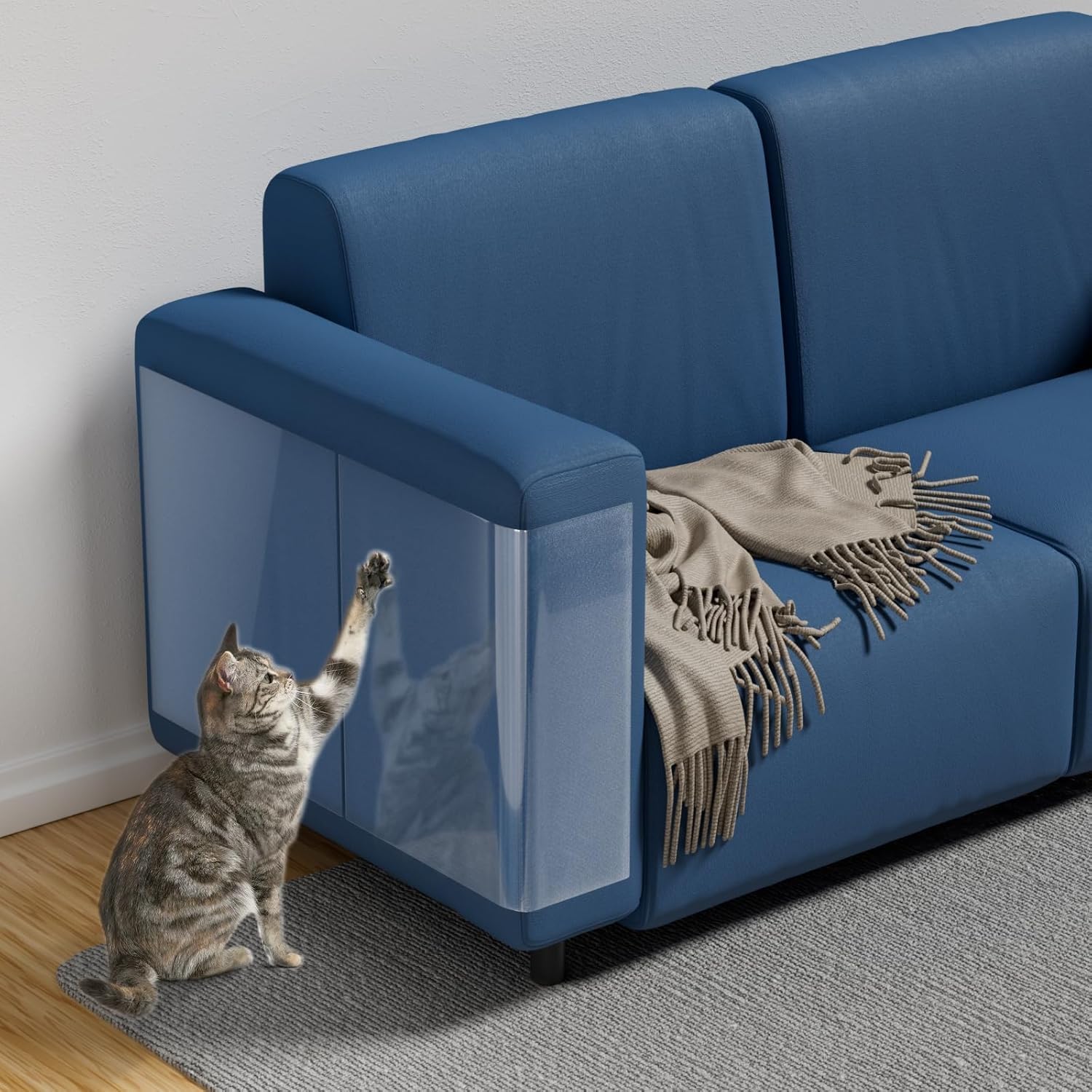
NO PINS Pain Cat Scratch Furniture Protector, 12 Pack
Cheapest way to redirect claws off upholstery, self-adhesive single-side sheets, no pins to lose
Does nothing for the scratching urge itself, so it only works alongside a real post

LEMONDA 31.5 Inch Cat Scratching Post
Tall enough for a full stretch, three sisal poles, two dangling balls add a play trigger
Single-column height means the base plate is doing all the work, and dangling strings wear out first
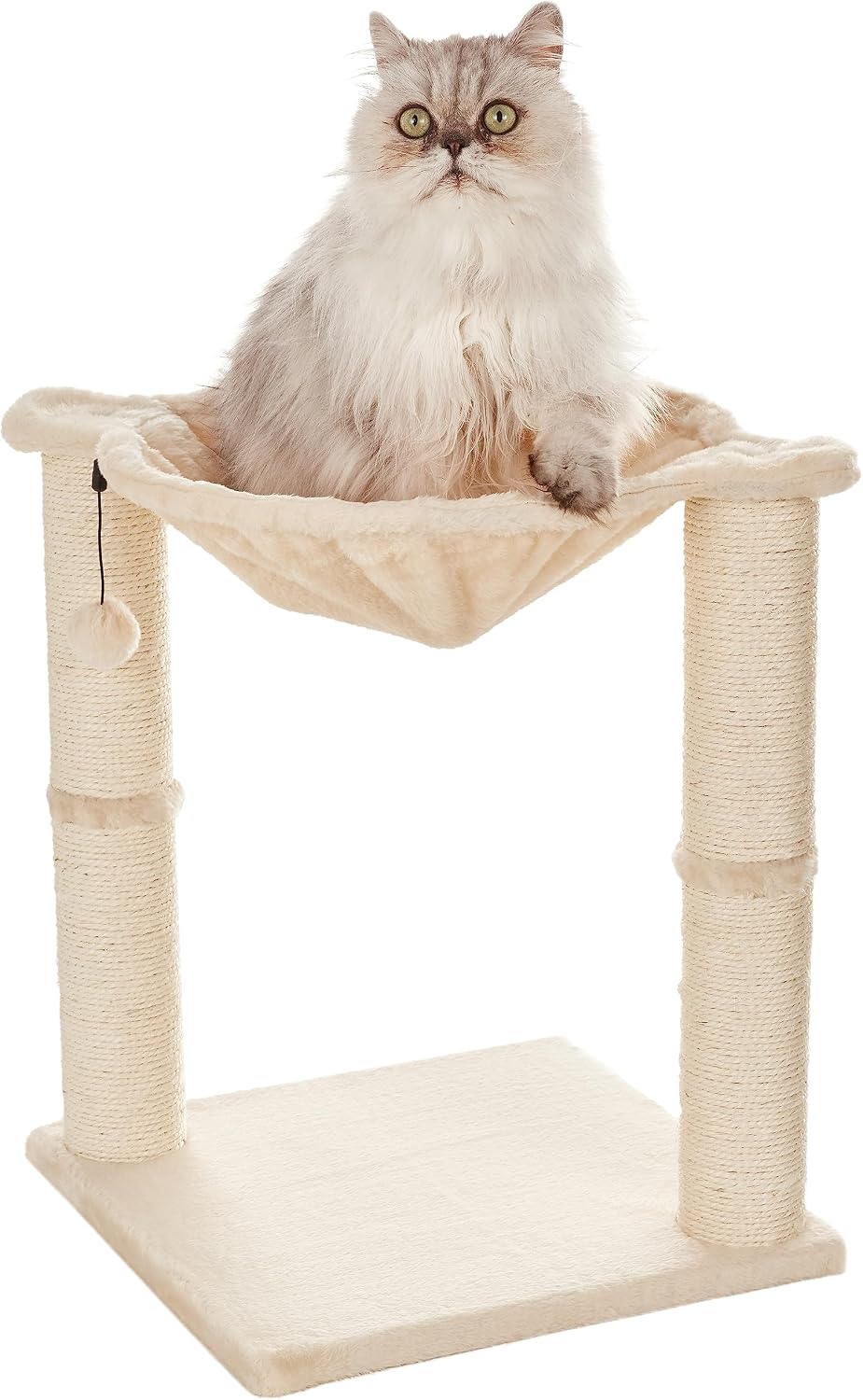
Amazon Basics Cat Tower with Hammock Bed and Scratching Post
Lowest-cost way to add a perch plus a hammock in a small footprint
At 19.7 inches tall it sits below waist height, which is kitten territory, not adult cat territory
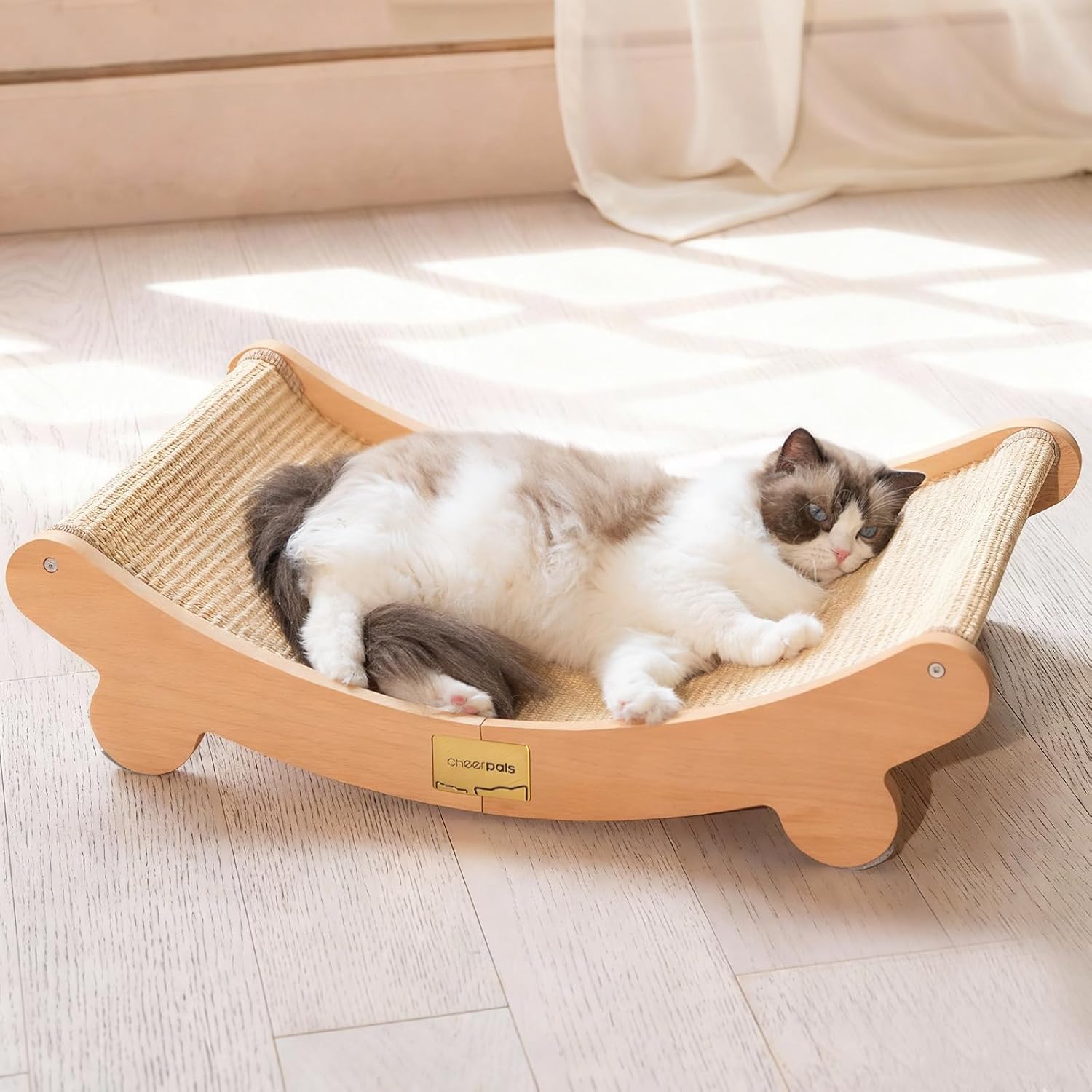
CHEERHOME PETS Sisal Cat Scratcher Bed, Wooden Cat Furniture (Extra Large)
Extra-large sisal surface doubles as a lounge, wooden frame, low center of gravity
Floor level only, so it adds zero vertical territory
Prices and availability were captured from Amazon Creators API and may change.
How I judge scratching furniture
My test has four questions, and I ask them in this order. First, does it survive a 12-pound cat launching onto the highest point? Second, is the scratching surface something cats actually want to dig into, meaning sisal or bare wood, not carpet? Third, is the base wide and heavy enough that the whole thing never wobbles? Fourth, would I put it in a foster room with five cats and walk away?
The fourth question is the one that eliminates most products. A tree with five cats on it gets used constantly, from every angle, by cats who are not being gentle. Anything that tips, sheds, or scuffs gets removed from the room.
Carpet-wrapped posts are the enemy. I say that as someone who still owns a carpet-wrapped tree from my first foster year, patched in two places. Carpet teaches a cat that fabric is a legal scratching surface, and then you are shocked when the couch becomes one. Sisal rope has a texture cats can shred, and shredding is the point. They want resistance, they want to see the damage, and they want it to be theirs.
The base plate is the whole game. Wide and heavy beats tall and pretty, every time. When you look at any post or tower, look at the bottom before you look at the top.
LEMONDA 31.5-inch scratching post: the height pick
Height is the non-negotiable. A cat scratching vertically is stretching the full length of its body, from front paws to back paws, and that stretch is the reason the behavior exists. It is exercise, it is scent marking, and it is a stress outlet. A post that stops at knee height interrupts the stretch and the cat goes looking for something taller, which is usually the side of your sofa.
At 31.5 inches with three scratching poles, this one clears the height bar that most budget posts fail. The two dangling balls are the bonus: they convert the post from a piece of furniture into a toy, and for kittens and young adults, that matters. Motion near a scratching surface gets paws on the surface.
The trade-off is structural. A tall post on a narrow footprint is the classic wobble risk, and wobble is what teaches a cat to distrust a post. If your floors are carpeted, put this against a wall or in a corner, and check the base plate for flex before you let the cats near it. The dangling balls and their strings are also the first component to fail, because that is true of every dangling toy ever manufactured. When the string goes, replace it or cut it off cleanly rather than leaving a frayed loop.
Amazon Basics cat tower: the budget entry point
This is the smallest and least expensive way to get a cat off the floor and onto something that belongs to them. It is a hammock, a perch, and a scratching post in one, at 15.8 by 15.8 by 19.7 inches, which fits in apartments where nothing else does. For a single kitten or a small adult cat, that is a legitimate setup.
Read the height, though. Under 20 inches is below most people's waist. For a cat, that is a low platform, not vertical territory. Vertical territory is the height that lets a cat survey a room from above the action, and it is the core reason to buy a tree at all. This tower does not provide it, and no amount of hammock comfort changes that.
Where it earns its place is as a starter piece for a kitten, or as a second station in a room where you already have a tall tree. It is also the piece I would buy for a foster kitten room, because the stakes are low and the size fits a confined space. If you have an adult cat over about 12 pounds, expect the hammock and perches to feel tight, and expect the whole thing to move when the cat jumps down with purpose.
CHEERHOME sisal scratcher bed: the horizontal option
Not every cat scratches vertically. Plenty of cats, especially older ones, prefer to dig horizontally into a flat surface on the floor, which is why so many rugs get destroyed. This is the product for that cat. It is an extra-large sisal surface in a wooden frame, and it works as both a scratching station and a bed, because a cat who claims a surface as theirs will sleep on it.
The low center of gravity is the strongest design feature here. There is nothing to tip. A flat scratcher cannot wobble, cannot be knocked over by a jumping cat, and cannot be avoided because it moved. For a household with a senior cat, a cat with mobility limits, or a cat who has already declared war on a rug, this is the pick.
What it does not do is give you height. That is a real limitation, not a nitpick. If this is the only scratching furniture you own, your cat still has no elevated territory, and cats who lack vertical space often take it out on whatever is tall and climbable. Pair it with a post or a tree. Also, an extra-large flat bed takes up floor space that a post would not, so measure before you commit.
NO PINS furniture protector: the damage control layer
This is the product people buy too late. It is a 12-pack of thick, self-adhesive, single-side sheets that stick to the vertical surfaces of a couch or chair and give claws something unappealing to hit. No pins means nothing to hammer in and nothing to lose under the cushion.
Be clear about what it is. It is a barrier, not a solution. It does not satisfy the scratching urge, it does not provide territory, and it does not teach your cat anything except that this particular corner is boring. Its job is to buy you time while the real scratching furniture gets established, and while the cat decides whether the new post is trustworthy.
The adhesive is where these products live or die. Self-adhesive sheets need a clean, dry, flat surface to hold, and they need you to press them down properly on day one. On a textured fabric or a curved arm, expect to re-press edges. The upside of the 12-pack format is that you can cover the specific spots your cat has already chosen rather than wrapping an entire sofa. Protect the two or three corners that get hit, put a real post within a few feet of them, and the behavior usually migrates on its own.
How these four actually work together
The mistake I see most often is buying one item and expecting it to solve everything. Scratching and climbing are different behaviors with different needs, and one product rarely covers both.
The combination that works in my foster room: a tall sisal post for the vertical stretch, a flat sisal surface for the cats who dig horizontally, a low tower or perch for the cats who want to be off the floor but not high, and protector sheets on the two furniture corners that have already been claimed. That covers the full range of what cats do, and it means no cat has a reason to improvise.
Placement matters as much as selection. Put the post next to the thing your cat is already scratching, not across the room. Cats scratch where they already feel territorial, so a post in the corner of a spare bedroom gets ignored while the couch in the living room gets shredded. Move the post to the couch, and the couch gets a break.
Reward the post. When your cat uses it, that is the moment for attention or a treat. When your cat uses the couch, redirect without drama. Punishment does not work on scratching, because the behavior is not defiance. It is a need.
What the specs do not tell you
A listing will tell you the height and the material. It will not tell you whether the base plate is heavy enough, whether the sisal is tightly wound or thin, or whether the perch fits a sprawled adult cat rather than a curled kitten. Those are the three things that determine whether you got a bargain or a wasted $40.
Check the base plate dimensions before anything else. A post that wobbles when a 12-pound cat lands on it will be abandoned, and an abandoned post is a decoration. If you can, put your hand on the top and push sideways before the cats get access. If it moves, it needs a wall, a corner, or a return.
Check the perch size if the product has one. A perch needs to fit a sprawled adult cat, not a curled kitten. Narrow perches are one of my most common complaints, because they look fine in photos and feel cramped in practice.
And check the scratching material honestly. If it is carpet, it is teaching your cat the wrong lesson. Sisal or bare wood, or nothing.
Bottom line
Buy the LEMONDA 31.5-inch post if you want one purchase that covers the behavior that matters most, and accept that you will need to stabilize it on carpet. Buy the CHEERHOME sisal bed if your cat scratches flat surfaces, or if you have a senior cat who wants a low, stable lounge. Buy the Amazon Basics tower if you have a kitten, a small apartment, or a need for a second station, and know that it is not vertical territory. Buy the NO PINS protector sheets on the same trip, no matter which of the others you choose, because your couch is already on the list and it does not get a vote.