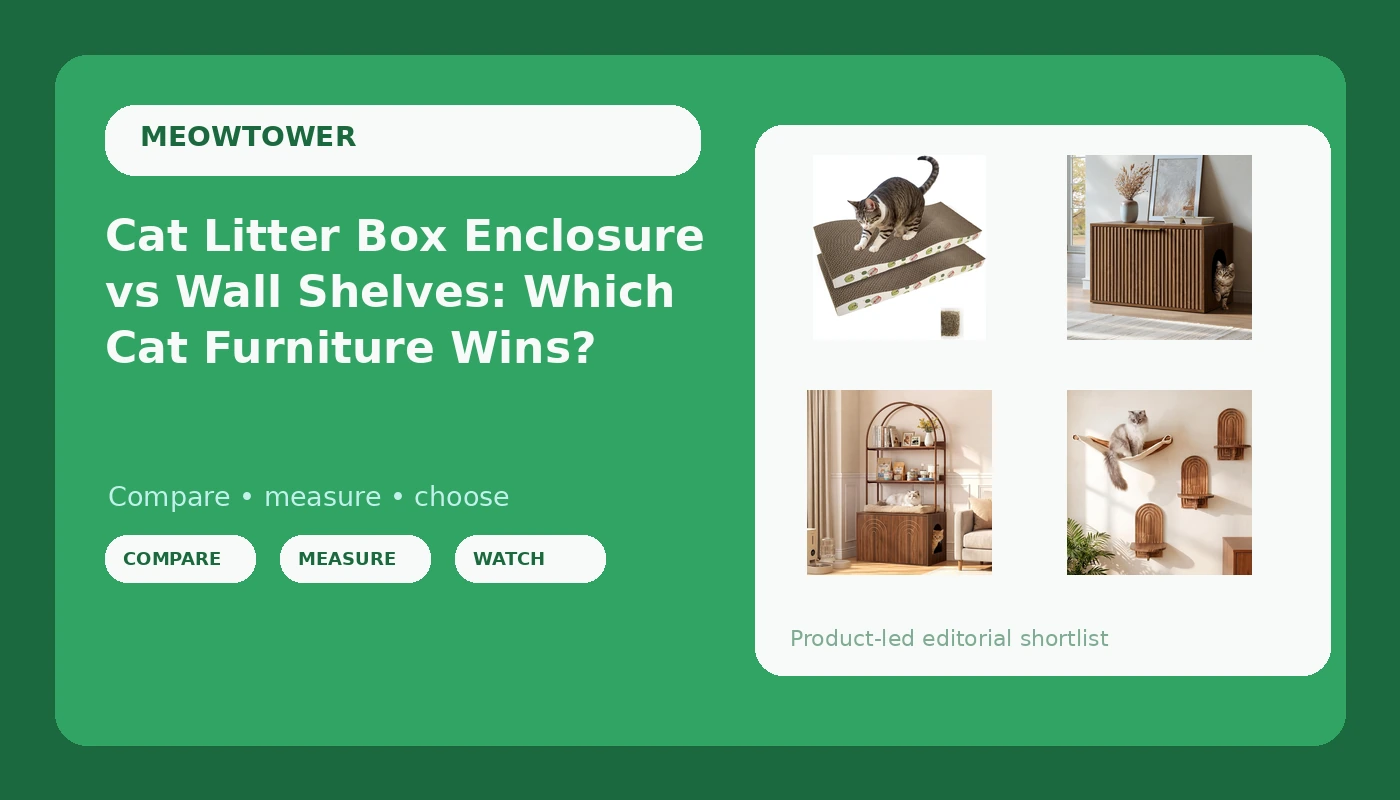
Eight years as a veterinary technician and more than 60 foster cats have taught me that cat furniture fails in predictable ways. The perch is too small for an adult cat. The base plate is too light for a cat landing from the couch. The scratching surface is carpet, so the cat scratches the couch instead. I foster five cats at a time in Tampa, and everything in my house has to survive all five of them, which is a much harsher review than any listing page can give you.
This comparison covers four different answers to the same problem: how do you give a cat what it needs without turning your living room into a pet store. Two of the four are hidden cat litter box furniture, one is a wall-mounted shelf, and one is a corrugate scratcher. They do not compete with each other directly. The mistake is buying one and expecting it to do another's job.
The right pick depends on which problem you actually have: the Evermagin 31.5" Cat Litter Box Enclosure Furniture for a one-cat apartment that needs the box out of sight, the 63-inch arched enclosure for a multi-cat home that also wants storage and vertical territory, the Cat Wall Shelves for small rooms where floor space is the scarce resource, and the TIMHAKA scratching board for the cat currently working on your sofa arm.
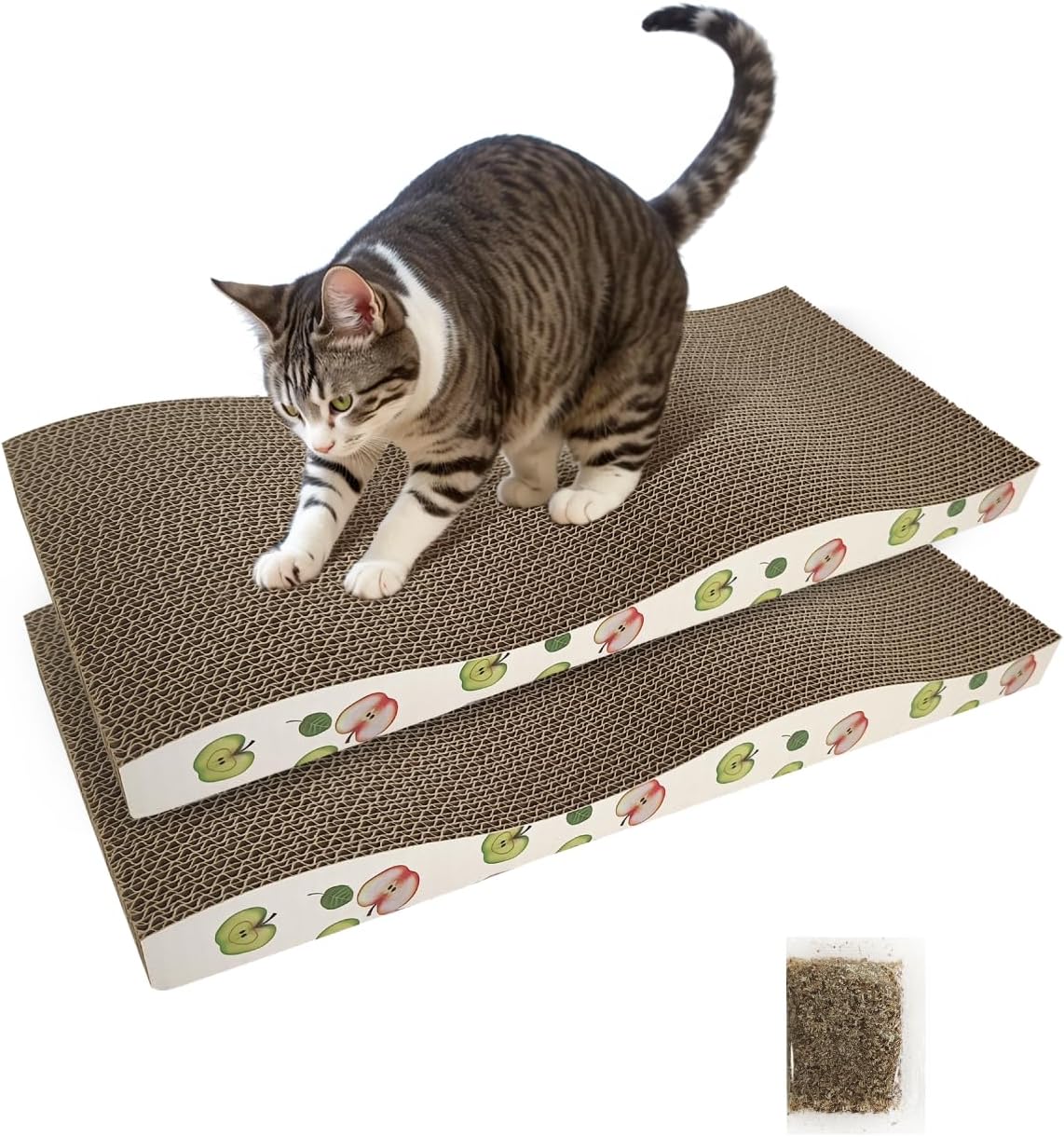
TIMHAKA Cat Scratching Board (Pack of 2)
Corrugate is the surface most cats accept on day one, double-sided design doubles the usable life, catnip included helps a skeptical cat commit
Corrugate sheds and flattens, it is a consumable rather than furniture, and it will never replace sisal for a cat that scratches at full strength
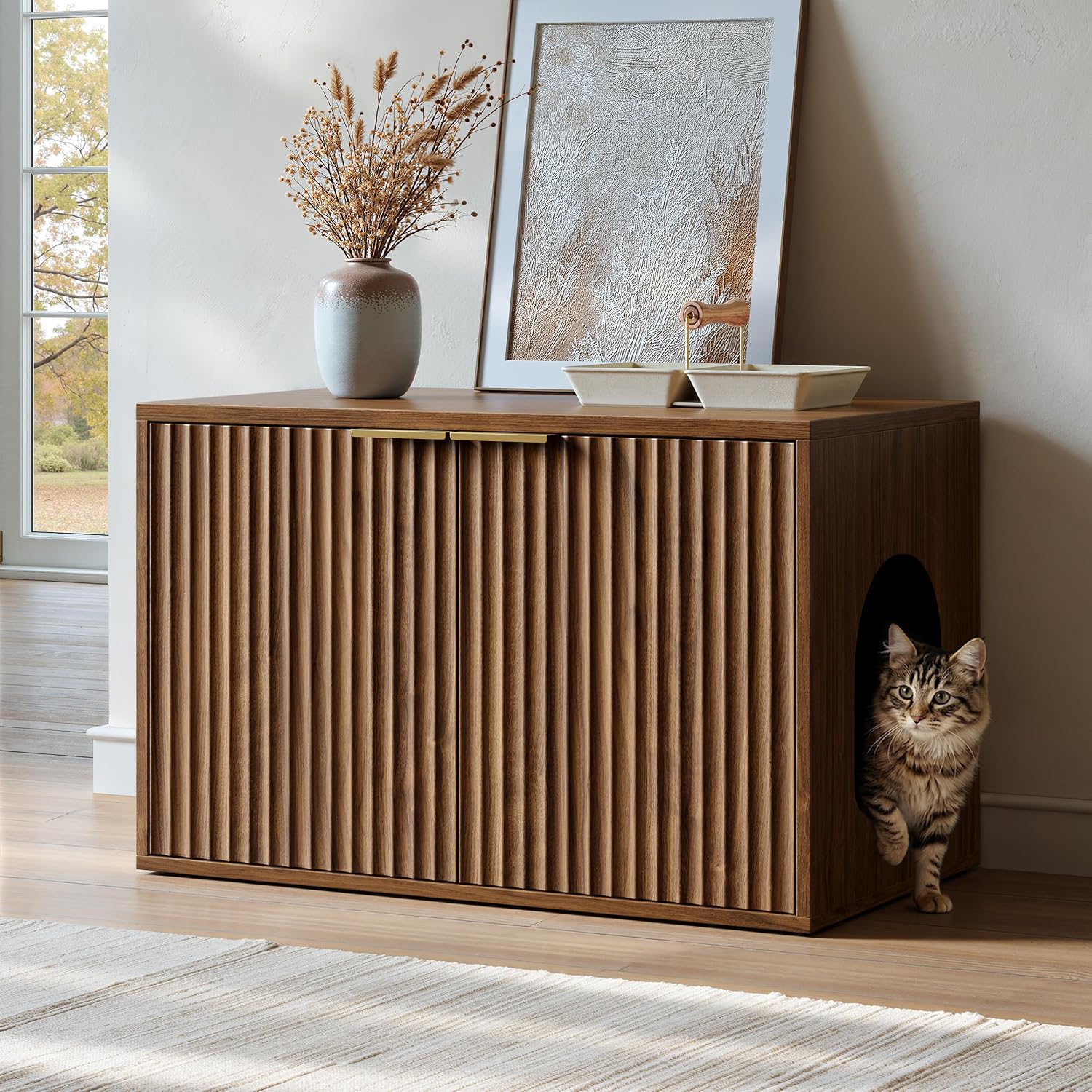
Evermagin 31.5" Cat Litter Box Enclosure Furniture
Hides the box at side-table height, small footprint, flat top gives back the surface you spent on the cat
Single purpose, adds no vertical territory, and a fully enclosed box puts odor management entirely on you
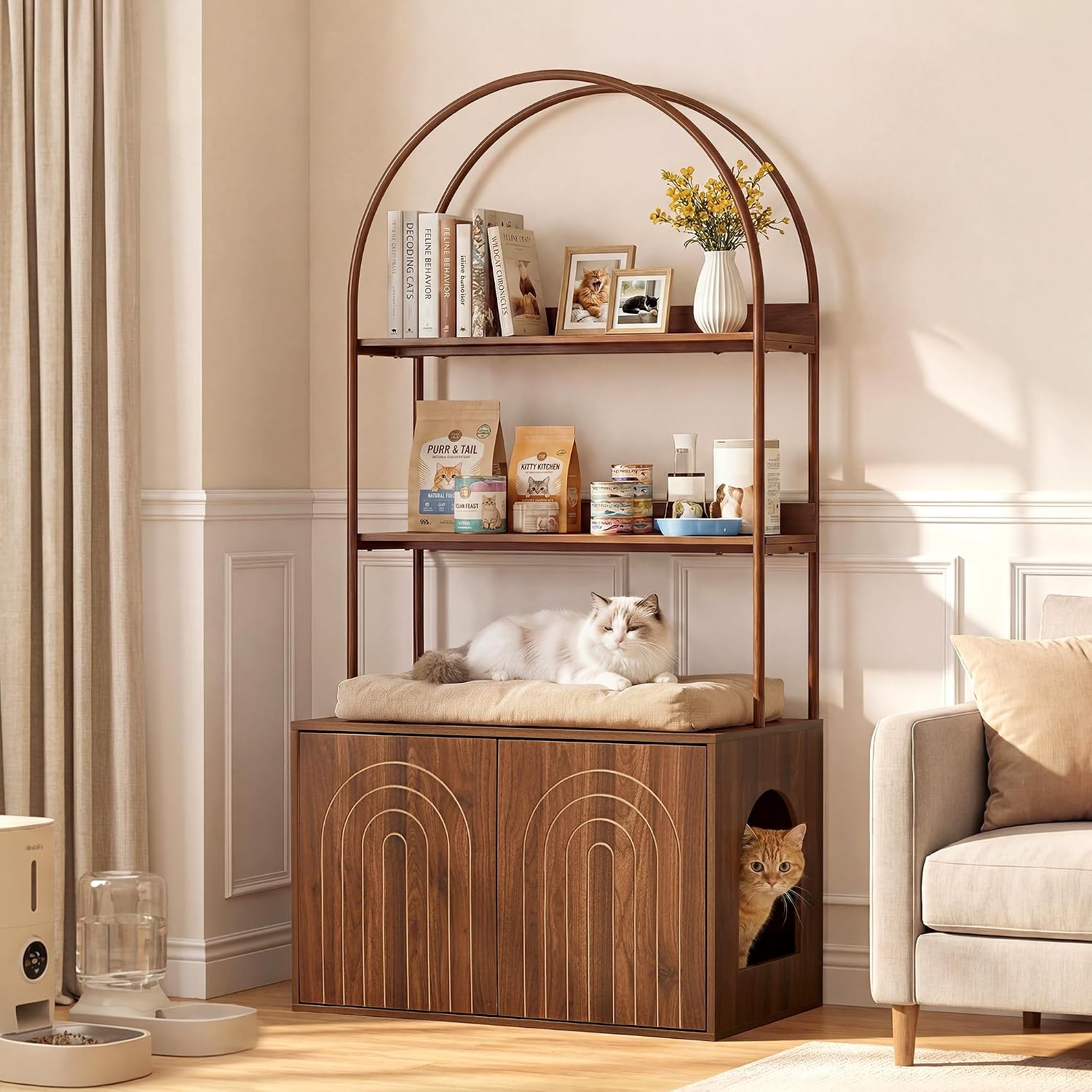
Arched Cat Litter Box Enclosure with 2-Tier Shelves, 63" Tall
Three jobs in one footprint, the shelves add real vertical territory, reversible entry and an anti-tipping kit are included
At 63 inches tall anchoring is mandatory, assembly is a project, and the enclosed litter area still needs a ventilation plan
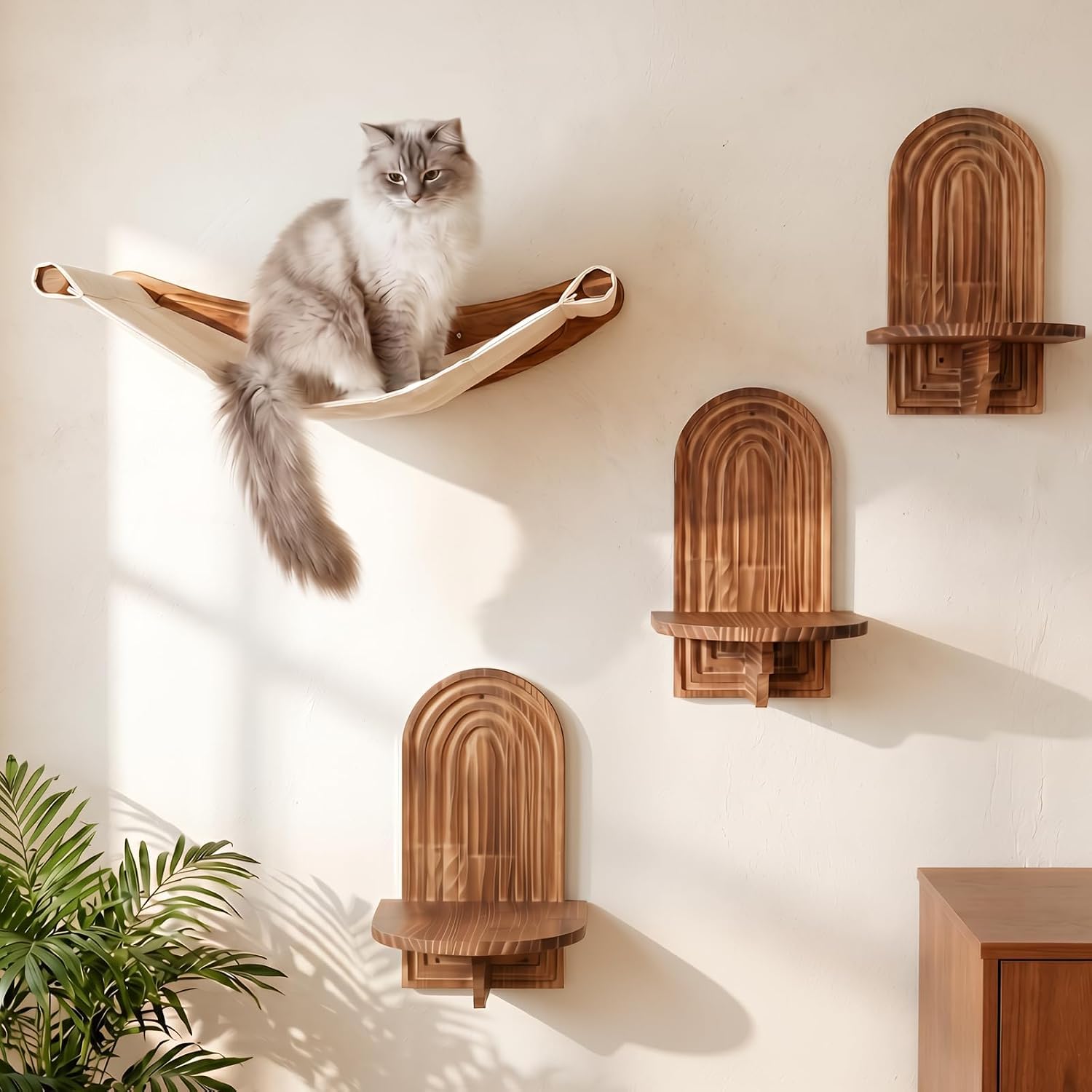
Cat Wall Shelves, Farmhouse Cat Wall Mounted Furniture
Vertical territory with zero floor footprint, and the farmhouse look does not scream cat furniture
Needs studs or serious anchors, offers no scratching surface, and a single shelf is not a route
Prices and availability were captured from Amazon Creators API and may change.
How I judge cat furniture
I do not care how a piece looks in a photo. I care about five things, in this order: height, stability, scratch surface, perch size, and what happens when five cats share it.
Height comes first because vertical territory is the entire reason cats want furniture at all. A perch below your waist is a rug with legs. The two enclosures here are 31.5 inches and 63 inches tall, and that difference matters more than any finish on either one.
Stability is second, and it is not negotiable. The question I ask about every new piece is simple: does it move when a 12-pound cat lands on the highest point? A wide, heavy base plate answers that question. A narrow one does not, no matter how good the top looks. Wall-mounted furniture gets the same scrutiny in a different direction, because drywall anchors that hold a picture frame will not hold a cat mid-leap.
Scratch surface is third. Sisal rope and corrugate both work. Carpet does not, at least not the way people hope, because carpet teaches a cat that soft floor coverings are fair game. If the furniture you buy has carpet-wrapped posts, expect your couch to stay interesting to your cat.
Perch size is fourth. An adult cat sprawled out is longer than most people think, and a perch sized for a kitten gets abandoned by month three.
The fifth is the one nobody puts on a spec sheet: multi-cat traffic. In a five-cat foster room every surface gets used by someone, and the pieces that fail are the ones that only work for one cat at a time.
Hidden litter box furniture: what you are actually buying
The Evermagin 31.5" Cat Litter Box Enclosure Furniture is the simplest piece in this group. It is a box with a door, sized to sit against a wall and hold a standard litter pan, with a flat top that gives back some of the surface area you spent on the cat. In a one-cat apartment that is exactly the right trade. The box disappears, the hallway stops smelling like a litter aisle, and you get a spot for a lamp.
Where it stops working: it does nothing for vertical territory. A cat that wants to be up high will climb your bookshelf instead. An enclosed box also concentrates odor, so ventilation and a scooping routine are on you. Check the direction of the entry before you commit, because if the opening faces a wall you will resent the thing within a week. Visit on Amazon →
The Arched Cat Litter Box Enclosure with 2-Tier Shelves is the ambitious version of the same idea. At 63 inches tall with two shelves, it is doing three jobs: housing the box, holding your stuff, and adding vertical territory. The reversible entry is a real feature rather than a marketing line, because it lets you point the opening away from a doorway or a walkway. The included anti-tipping kit matters at this height, and I would use it even if the cabinet feels solid on carpet, because a 63-inch cabinet with a cat on the top shelf is a lever. Visit on Amazon →
The honest trade-off is that a cabinet doing three jobs does none of them perfectly. The litter compartment is still a compartment, which means you manage airflow and odor yourself. Assembly is a real afternoon with a screwdriver. And the taller the piece, the more the whole thing depends on the base and the anchor rather than the frame.
Both of these are furniture decisions, not behavior decisions. If your cat is already avoiding the box, a nicer box around it will not fix that. Rule out pain, an unclean pan, and a location the cat hates first, then buy furniture.
Wall shelves: vertical territory without the footprint
Cat Wall Shelves, Farmhouse Cat Wall Mounted Furniture is the piece I recommend most often to renters and to anyone in a small apartment, with one big caveat: you have to be willing to put holes in the wall, and you have to do it properly. Shelves go into studs, or into anchors rated for far more than a cat weighs, because the load is not static. A cat landing on a shelf is an impact load, not a decoration.
What you get in return is vertical territory with zero floor footprint. In a small apartment, that is the difference between a cat tree in the middle of the room and a route along the wall. The farmhouse look also means the piece reads as decor rather than pet equipment, which matters if you share the space with someone who did not sign up for a cat condo.
What you do not get is a scratching surface or a single obvious destination. Wall shelves are a route, not a perch, and one shelf alone will be ignored. Cats want a path with a couple of landing spots and a high point that looks over the room. Plan three or four pieces minimum, staggered in height, with the highest one near a window. Visit on Amazon →
Corrugate versus sisal: the scratching argument
The TIMHAKA Cat Scratching Board is the lowest-commitment item here, and it is the one I would buy first if a cat is already working on your couch. Corrugate is the surface most cats accept on day one, which is why I keep a pad next to the sofa in every foster room. The double-sided design doubles the usable life, the included catnip helps a skeptical cat get a first paw on it, and a two-pack means you can put one where the cat already scratches and one where you want it to scratch. Visit on Amazon →
The catch is lifespan. Corrugate sheds, flattens, and eventually gets ignored. It is a consumable, not furniture, and I would never describe it as a replacement for a sisal post. A cat that likes to grab and pull at full stretch will rip through corrugate in a way it cannot rip through rope. Buy corrugate to redirect a cat this week. Buy sisal when you want a surface that is still there next year.
What the design choices tell you
Four products, one pattern: the more jobs a piece takes on, the more you have to manage yourself. The small Evermagin enclosure takes on one job and does it cleanly. The 63-inch arched cabinet takes on three and hands you assembly, anchoring, and airflow in exchange. The wall shelves take on none of the litter problem and solve the floor-space problem completely.
Height is the variable people underestimate most. Two of these four pieces do nothing for vertical territory, and that is fine as long as you know it going in. The cat that has nowhere high to sit is the cat that ends up on your kitchen cabinets.
And the anchoring question runs through all of it. A wall shelf, a 63-inch cabinet, and a cat tree all fail the same way: someone trusted a small anchor or a narrow base and a 12-pound cat proved them wrong.
The trade-offs, stated plainly
The TIMHAKA scratching board is a consumable. It is the cheapest way to stop a couch attack, and it will need replacing.
The Evermagin enclosure solves odor and appearance, not enrichment. Your cat still needs something to climb.
The arched 63-inch enclosure asks for wall anchoring, an afternoon of assembly, and a real ventilation plan for the litter compartment. It gives back storage and height in the same footprint.
The Cat Wall Shelves require drilling into studs and a plan for three or four pieces, not one. In exchange you get vertical territory without surrendering any floor.
How to choose
If you have one cat and the litter box is the problem, the Evermagin 31.5" enclosure is the straightforward answer. It hides the box, gives you a surface back, and does not demand a wall anchor.
If you have multiple cats, a hallway that doubles as a litter room, and you want storage along with height, the arched 63-inch enclosure earns its footprint. Budget the anchoring time and check the entry direction before you assemble anything.
If you rent, live small, or already have a cat tree you tolerate, the Cat Wall Shelves are the better spend. Buy three or four, stagger them, and put the highest one where the cat can watch a window.
If your cat is scratching the sofa right now, start with the TIMHAKA scratching board and place it directly against the damaged furniture. Redirecting a scratching habit is easier than eliminating it, and corrugate is the surface that gets accepted fastest.
What I'm watching next
I have the arched enclosure on my list for the foster room, mostly to see whether a 63-inch cabinet stays planted with five cats using it as a staircase. That is the test that matters, not the showroom photo. Until then, the rule I give everyone stands: buy for the height, the base, and the scratch surface, and treat everything else as decoration.