
I have been a veterinary technician for eight years and a foster mom to more than 60 cats, which means I have assembled, patched, and eventually carried to the curb more cat furniture than most people will see in a lifetime. The pattern never changes. Someone buys a pretty tower that reaches their knee, the cat ignores it, and the couch pays the price. Good cat furniture for large cats is not complicated, but it is specific: height above your waist, a scratching surface the cat actually uses, a perch wide enough for a sprawled adult, and a base plate heavy enough that a 12 pound cat landing on the top platform does not turn the whole thing into a tipped-tower lawsuit.
The four products below are a strange group on purpose. Two are posts, one is a small tower, and one is a cooling pad that is not furniture at all. That mix is closer to how people actually shop than any tidy category page, because the real question is not "which cat tree wins" but "what does my cat need that my apartment is not giving her." If you have a big cat, a warm cat, or a cat who has already declared war on your sofa, the answer is usually a combination, not a single box.
If you want one purchase from this group, the 46 inch extra tall sisal post is the closest thing to a sure bet for a large cat, because it delivers the two things a big cat actually uses: full stretch height and sisal rope. If you also need a place to nap, the Aechonow tower is the one to look at, and the FUKUMARU post with perch sits in the middle. The cooling pad is an accessory, not a substitute, and I will explain exactly when it earns its spot.
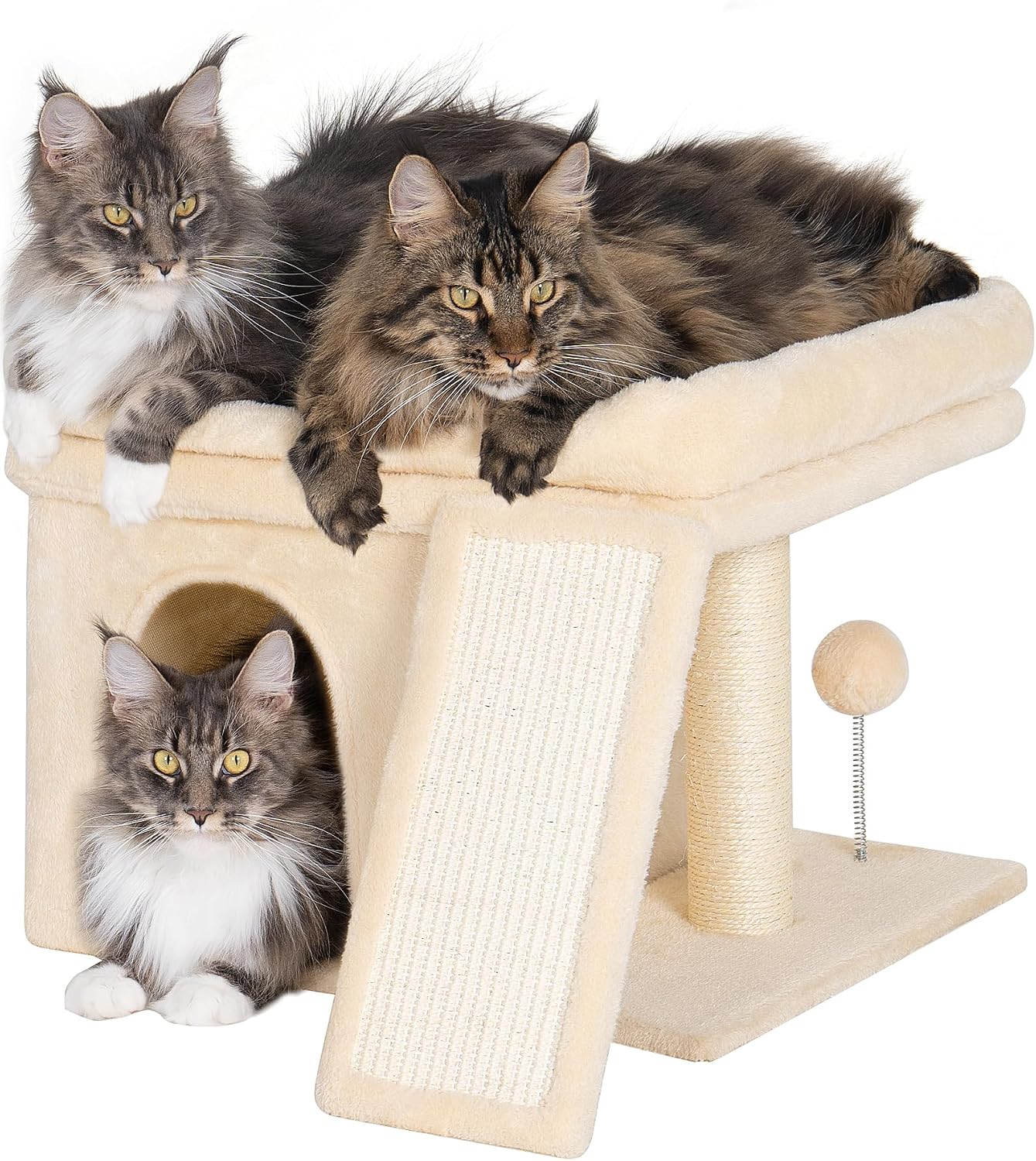
Aechonow Small Cat Tree Tower for Large Cat, Cat Bed House with Large Perch
A perch described as large plus an enclosed bed house gives a big cat two places to be, and a small tower footprint fits a real apartment
A tower built small tends to top out lower than a large cat wants, and the base plate is the first thing to wobble when a big cat lands
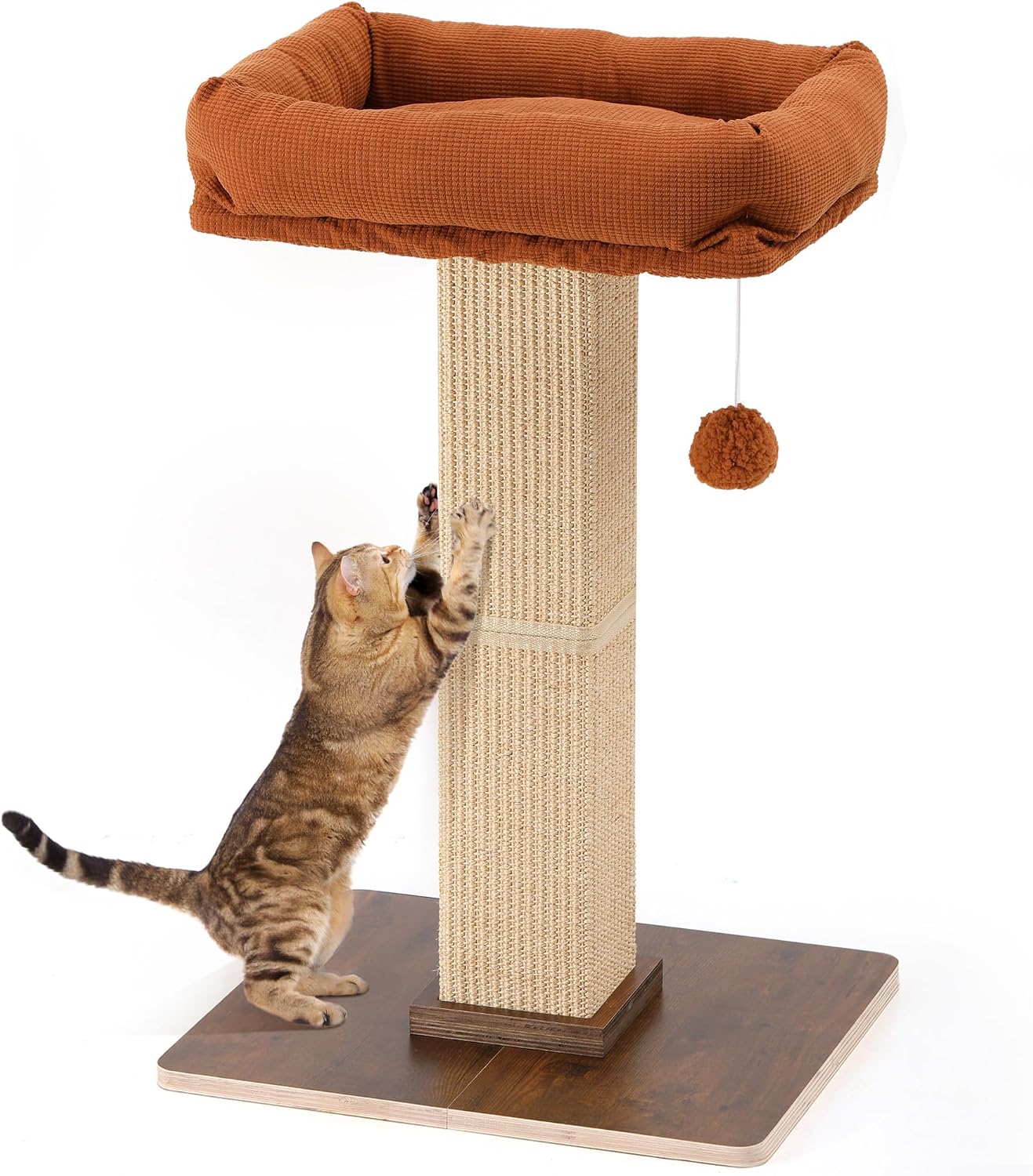
FUKUMARU Retro-Style Cat Scratching Post with Perch for Indoor Adult Cats
Post and perch in one small footprint, styled for a living room instead of a garage, and aimed at adult cats rather than kittens
The scratching material is not named in the product description, and for me it is sisal or nothing; perches on post-style units also tend to run small
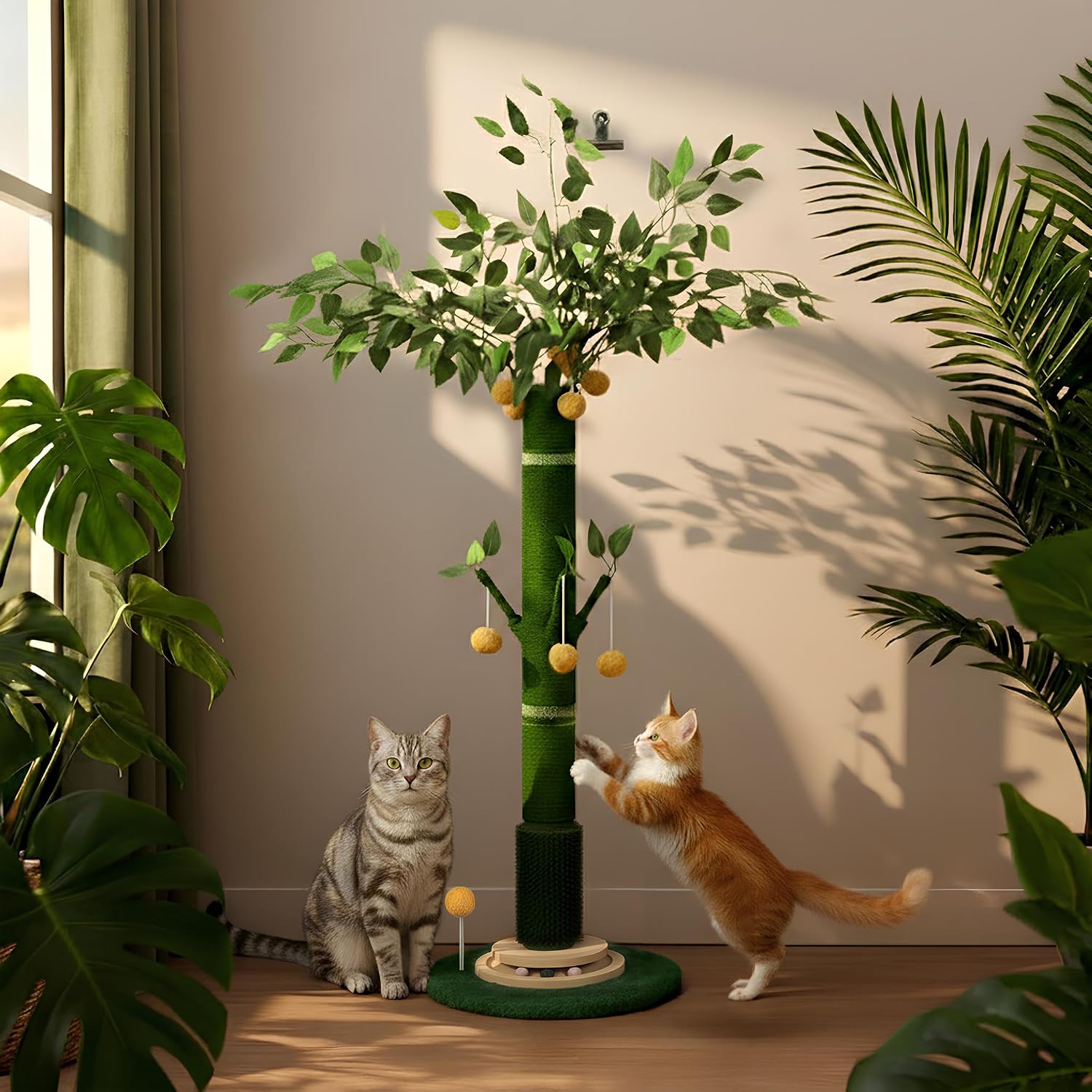
46" Extra Tall Cat Scratching Post for Large Cats, Sisal Rope
Extra tall so a big cat gets a full stretch, sisal rope named outright, and it is sized for large cats rather than kittens
No perch, so it solves scratching and stretching but not the nap spot, and a bare post wears in the middle where the cat always hits

The Green Pet Shop Cool Pet Pad - Large, Blue - Self-Cooling, Pressure Activated Mat for Dogs & Cats from 46-80 lbs - Non-Toxic Gel, No Water Needed
Pressure activated gel needs no water, no power, and no setup, and it cools exactly where a cat chooses to lie down
Sized for 46 to 80 pound pets, which is far bigger than any cat, so it works as a floor or platform pad and not as a perch pad
Prices and availability were captured from Amazon Creators API and may change.
How I judge cat furniture for large cats
Scratching is communication, not destruction. A cat scratches to mark territory, to shed the outer sheath of the claw, and to stretch the entire spine and shoulder assembly. That last part is the one people forget, and it is the reason a short post fails. If the top of the post is below the cat's full stretch, the cat gets half a workout, loses interest, and finds something taller. Your couch is taller. Your couch also has that nice woven texture. That is not a cat problem, that is a furniture selection problem.
So the first check is height. For a large cat, the post should let her stand on her hind legs, reach both front paws up, and pull. A post described as extra tall is doing that work. A post that stops at knee height is a scratching pad with delusions.
The second check is the surface. Sisal rope gives a claw something to catch and peel, which is the entire point. Carpet wrapped posts are the enemy, and I will say that as someone who still owns one carpet wrapped tree from my first foster year and still patches it every spring. Carpet teaches a cat that carpet is a scratching surface. Then the cat walks six feet to your rug and applies the lesson. The tree did not fail. It taught.
The third check is the perch. A perch needs to fit a sprawled adult cat, not a sitting kitten. If a 15 pound Maine Coon cannot lie flat with a leg hanging off the edge, it is a shelf, not a bed.
The fourth check is the base plate. Wide and heavy beats tall and pretty every single time. My test is boring and reliable: does it move when a 12 pound cat lands on the top platform from a standing jump? If yes, it goes in a corner with a wall brace or it goes back in the box.
The tower: Aechonow Small Cat Tree Tower
The Aechonow listing describes a small tower for a large cat with a cat bed house and a large perch, and that combination tells you what the designer was thinking. The word small refers to the footprint, not the perch, which is the right way to build for a studio apartment or a foster room with too many beds in it already. A compact base with a genuinely wide top platform is a better use of floor space than a sprawling condo with three narrow shelves.
The enclosed bed house is the part I like most for a nervous cat. Cats want to be high and hidden at the same time, and a covered cubby at mid height gives a shy foster a place to watch the room without being watched. For a large cat, though, that cubby needs to be genuinely large. I have seen plenty of "cat bed houses" that a big tomcat can enter and not turn around in, and a cat who cannot turn around will not use it twice.
The check I would run before buying is the height of the top perch. A tower described as small tends to top out lower, and a low top perch means the cat is still looking up at the window sill. Measure your own space before you commit. If the top perch sits below your standing shoulder height, a large cat will treat it as a stepping stone.
The post with a perch: FUKUMARU retro-style
The FUKUMARU is the compromise pick, and I mean that as a compliment. A scratching post with a perch solves two problems in one small footprint, and the retro styling means it can live in a living room without looking like a piece of gym equipment. The listing says indoor adult cats, and that phrase matters. So much of the market is built for kittens, and a kitten-sized post is a post your adult cat will outgrow in four months.
The honest problem is the material. The product description does not name the scratching surface, and I do not recommend a post without knowing what the cat is supposed to dig her claws into. If it is sisal, this is a strong small-space pick. If it is carpet, skip it, no matter how good it looks next to your bookshelf. Ask the seller, read the answered questions, and look at the customer photos closely enough to see the fiber. That is a five minute job that saves you a year of redirection training.
The second caveat is perch size. On post-style units the platform is usually compact, because the whole point is a narrow footprint. A 10 or 12 pound cat can curl on a perch like that. A big cat can sit on it and will, but she will not sprawl, and a cat who cannot sprawl will eventually choose the back of your sofa instead.
The tall sisal post: 46 inches
This is the one I would buy first for a large cat, and the reason is simple. It names the material and it names the height. Sisal rope, extra tall, built for large cats. No guessing.
Forty six inches is roughly chest height on an average adult, which means a big cat can plant her back feet, reach all the way up, and get a full body stretch without hitting the ceiling or running out of post. That full stretch is the behavior that keeps claws healthy and keeps a cat from practicing on your stair runner. A post that is too short gets used once, at half effort, and then ignored.
The trade-off is that a post is not a tree. There is no perch, so this does not give your cat vertical territory, only a scratching and stretching station. If your cat already has a window perch or a bookshelf she is allowed on, that is fine. If she has nothing above waist height, this post solves half the problem and you still need a place for her to sleep up high.
Two things to verify before you buy. First, the base plate. A tall post is a lever, and a tall post on a small base is a wobble machine. Second, check whether the top has a small platform or a plain cap. Some tall posts include a little seat at the top, and that turns a scratching station into a lookout. Customer photos will tell you which version you are getting.
The odd one out: the cooling pad
The Green Pet Shop Cool Pet Pad is not cat furniture, and I am including it anyway because in Tampa it is the difference between a perch that gets used and a perch that gets abandoned in June. A cat who is too warm will not sleep on a fleece platform, no matter how good the view is. She will stretch out on the tile in the hallway and you will conclude, wrongly, that she hates the tree.
This pad is pressure activated, which means the gel cools where the body presses down, and it needs no water, no power, and no refrigeration. That is the version I recommend to foster homes, because a mat that requires a freezer rotation is a mat that ends up in a closet by week three. The listing also says non-toxic gel, which matters in a house with a cat who chews things she should not.
The catch is in the sizing. This pad is listed for pets from 46 to 80 pounds, which is dog territory. For a 10 pound cat, it is a large rectangle. That is fine on the floor, on a wide platform, or across the seat of a big cat tree, but it will hang over the edges of a narrow perch and it may slide. If you put it on a platform, check that it lies flat and does not shift when the cat jumps up. A sliding mat under a landing cat is how you get a cat who stops using the top perch.
The trade-offs nobody puts on the box
Height and stability pull against each other. The taller the post or tower, the more the base plate has to do, and the more likely a manufacturer cheats on weight to keep shipping cheap. That is why I care more about the bottom six inches of a cat tree than the top two feet.
Scratching and sleeping happen in different places. A cat scratches where she walks into a room, and she sleeps where she can watch the door. One product rarely covers both well. A tall sisal post near the doorway plus a high perch somewhere else beats one expensive tower that does neither job properly.
Carpet is not a scratching surface, it is a training tool for your rug. If a listing brags about carpet covered posts, that is not a feature, that is a warning label.
Cheap trees have a shelf life measured in months. The posts with cardboard cores collapse in the middle, and the plush falls off in sheets. If a tree costs less than a decent dinner for two, you are renting it, not buying it.
Accessories are not furniture. A cooling pad, a hammock, a replacement sisal sleeve, all of those extend the life of a good tree. None of them give a cat the height she is missing.
Matching the pick to your cat
If your cat is a vertical cat who spends the day on top of the refrigerator, buy height first. The tall sisal post plus a high perch is your setup, and the cooling pad goes on whichever surface she uses in summer.
If your cat is a floor cat who scratches the sofa arm and sleeps under the bed, start with the post. The 46 inch sisal post gives her a legal place to do the thing she is already doing, and you can add vertical territory later once she trusts the new object.
If you have a nervous foster who hides, the Aechonow tower with the enclosed bed house is the better first purchase, because a cat who feels exposed will not use anything, no matter how tall it is.
If you are furnishing a foster room with several cats, buy two posts rather than one big tree. Five cats on one tower is a conflict waiting to happen, and separate scratching stations spread the marking behavior out instead of concentrating it.
What I am testing next
My current foster crew of five is working through this year's stress test, eight units over 60 days, with a destruction score for every post and every perch. Biscuit, who has personally rejected more furniture than most cats will ever see, has already made her opinion known about two of them, and she is usually right.
The things I am tracking are boring and specific: how much sisal is left after 30 days of a 12 pound cat, whether the base plate walks across the carpet, and whether the top perch gets used at night or only when I am watching. Those three data points tell you more about a cat tree than any photo of a kitten on a platform.
Until those numbers are in, the ranking above is based on design and behavior, not on a lab report. The checks are the same ones I would run in your living room: height above the waist, sisal on the surface, a perch that fits a sprawled adult, and a base plate that does not move when the cat lands. Get those four right and you can stop buying cat furniture for a while. Get them wrong and you will be back here in six months, reading another comparison, while your couch quietly loses another corner.